
With the onset of summer, temperatures tend to rise, leading to higher electricity bills. Air conditioners activate later, and poorly insulated houses struggle to reach a comfortable temperature. The U.S. Energy Information Administration concludes that, in most homes, heating and cooling account for almost half of energy consumption. That is why enhancing those external significant improvements in efficiency is important.
Siding is one of the most significant yet frequently neglected exterior elements that should be mentioned. Good siding not only decorates a home but also insulates, prevents heat transfer, and helps maintain continuously balanced indoor temperatures during hot summer seasons.
The Effect of Siding on Home Energy Efficiency
Siding is the initial protective coating of the exterior and interior surfaces of a home. Properly installed, it helps keep out outside heat and prevents cool indoor air from escaping. A properly installed siding system supports the wall insulation. This mixture will reduce the heat that enters the home and help the cooling systems operate more effectively..
However, siding might lose efficiency over time. Insecure weathering, age, and improper construction can leave loopholes (gaps) or cracks on the exterior. These openings permit the entry and exit of hot air in the wall structure, as well as the exit of cold air. When this occurs, air conditioning systems must strain to keep interiors comfortable. Therefore, it leads to increased energy use and higher cooling expenses.
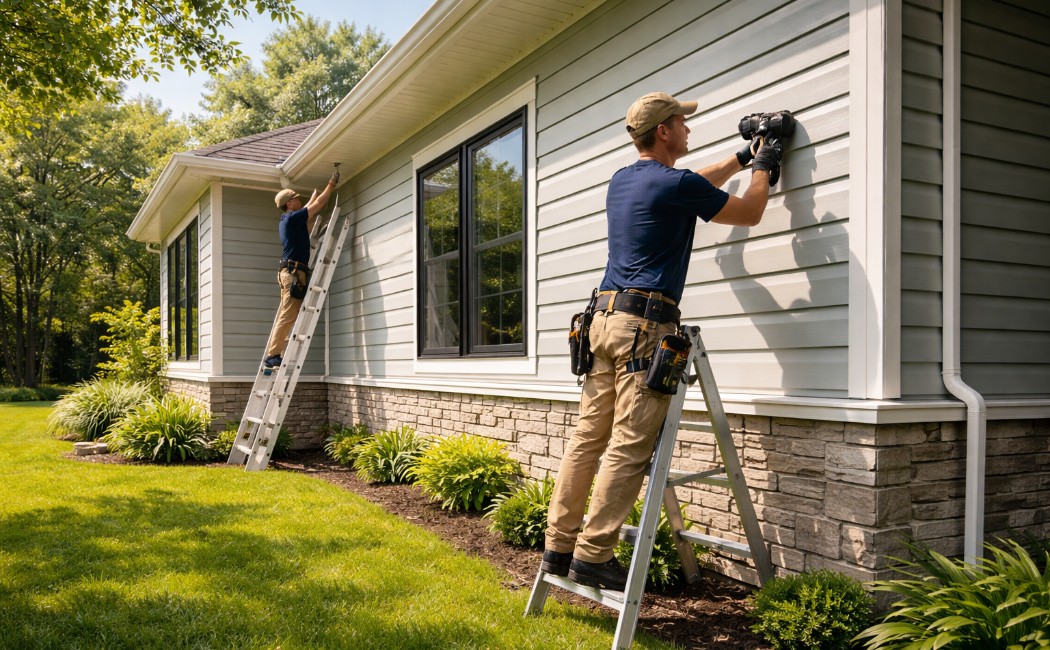
It is also necessary that professionals install it. Even a good siding material cannot perform well when it is not capped and installed correctly. Expert contractors ensure the siding is tight and seals the insulation behind it.
Common Symptoms: Your Siding is Slipping off in Terms of Energy Efficiency
Most people who own homes do not even know that their homes are affected by siding when it comes to energy conservation. However, there are some red flags to watch for that indicate the exterior no longer provides adequate insulation.
Some common signs include:
- Siding cracks or warping.
Loose or missing parts that leave holes in the wall exterior.
Increased cooling expenses in summer seasons.
Moisture in walls or around window frames.
There are cracks and loose panels through which external air infiltrates the walls, thus undermining the insulation system. This may eventually make the home harder to cool in hot weather.
Another severe issue is moisture. When water gets into the wall construction, the insulation may be damaged and become ineffective. This not only makes it hard to be energy-efficient but can also create structural problems that cannot be overlooked. Early identification of these symptoms enables homeowners to repair or replace siding before the problem becomes more costly.
Modern Siding Materials Made to Be Efficient
The current siding materials are designed to offer better insulation and enhanced heat resistance. New siding systems are more energy-efficient and durable than older materials.
Two Popular Energy-saving Alternatives are:
- Insulated vinyl siding (comes with a foam layer that enhances thermal resistance).
- Fibre cement siding is known to be strong and capable of withstanding wall weathering.
Vinyl siding is an insulated material that is highly efficient at heat transfer, thanks to the foam backing that provides an added layer of insulation. This helps stabilize indoor temperatures in both hot and cold seasons.
Although concrete fiber siding is not insulated, it offers high durability and weather protection. It also helps the exterior system to be very strong and sustainable when properly insulated.
The Effect of Framing and Structural Support
Background Design
The design behind siding is significant to its overall performance. A house’s framing system supports siding panels and helps hold them against the walls. Framing helps provide a tight fit between siding panels. This stops air leaks and improves wall insulation.
Siding panels can move or remove if the framing is weak or uneven. Minor misalignments will result in openings through which exterior air penetrates the building. On this account, contractors tend to check the framing during siding replacement. Structural damage before installation helps the new siding perform better and last longer.
Outdoor Carpentry that is Energy-saving
Another significant factor that influences energy efficiency is exterior carpentry. Characteristics such as trim boards, window frames, and wooden corners are used to seal the sides of siding. When such woody elements are destroyed or decay, they may leave small holes around windows or doors. These cracks allow warm air to enter the house, compromising the insulation’s effectiveness.
Making the broken trim and woodwork firm enhances the seal around the exterior. Siding panels are also properly attached with proper carpentry to fit windows, doors, and corners.
When siding and exterior elements come together, they form a protective wall that enhances insulation and minimizes unwanted air infiltration.
By preserving such exterior features, it is possible to create a visible impact on the comfort inside and energy expenses.
Why It Makes Sense to Have Spring as the Right Time to Upgrade Siding
Spring is often the best time for siding upgrades, as the weather is quieter. If the installer is exposed to extremely hot or cold weather, it can influence the expansion and settling of the siding materials. Weatherstripping the siding in Spring allows the material to settle well and makes the installation easier.
Another benefit of spring projects is that it gets the home ready for summer. Better insulation is utilized when new siding is installed to exclude the hot air and include the cool air. The early upgrades are also useful in saving time on the part of the homeowners as they do not have to be in a hurry during the summer building season when there may be no contractors available. As the siding improvement project is finalized (in spring), homeowners are able to start the summer season with better energy efficiency and indoor comfort.
Final Thoughts
New siding is able to dramatically enhance the energy efficiency of a home. Siding assists in preserving the indoor temperatures even in hot seasons by eliminating heat transfer, air leakage and insulation loss. Rustic or damaged siding can increase the cooling expenses and even permit the absorption of moisture by the walls. It is more protective and cost saving because it is replaced by more modern and energy-saving materials.
Prior to the arrival of summer, it is better to replace the siding so that the home can be more resistant to high temperatures. Proper installation and maintenance of exterior components can offer a durable exterior to the homeowners who can reduce their energy bills, gain more comfort and get a durable exterior. Before the summer season, enhance the energy efficiency of your home through professional siding services of SCMG Custom Construction.