
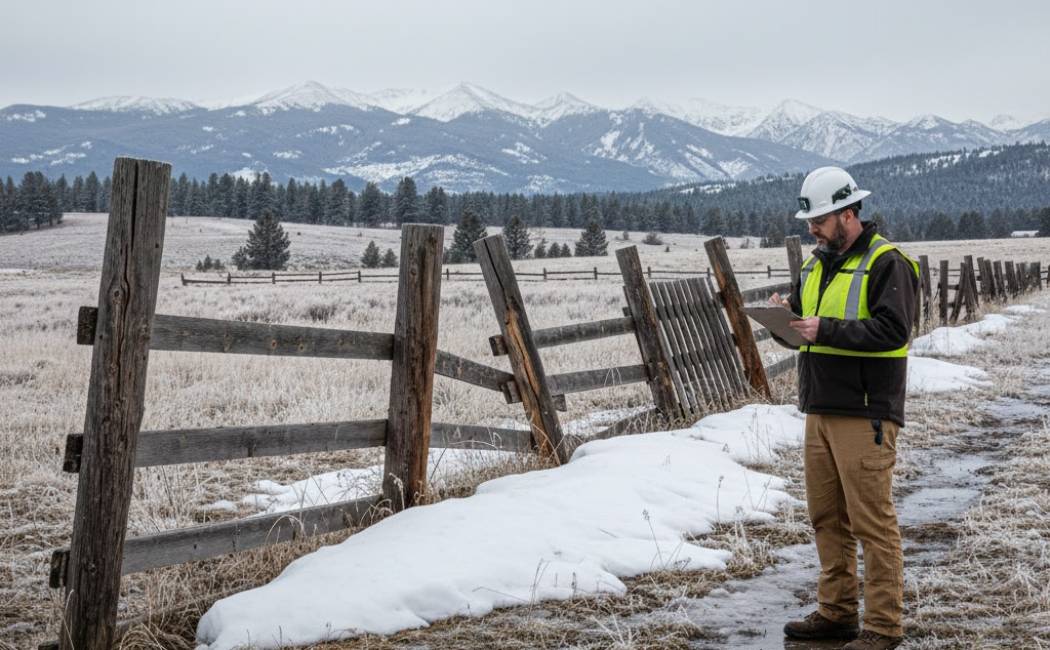
Montana winters are notorious for their cold temperatures. Residential and commercial fences bear most of the brunt. Well-constructed fences suffer the most damage. Property owners are left with the difficult decision of winter’s end. Is the fence damage small enough to fix, or does the whole fence need to be replaced?
Making an informed decision saves money and the frustration of dealing with damaged property in the future. Correct fence estimations from the Best Construction Company MT will ensure the right choice is made for affordable and durable fence solutions.
How Montana Winters Damage Fences
Montana’s extreme winter conditions create a multitude of points of stress that can damage fence stability. This makes it easier to determine what the right answer is and how damage occurs.
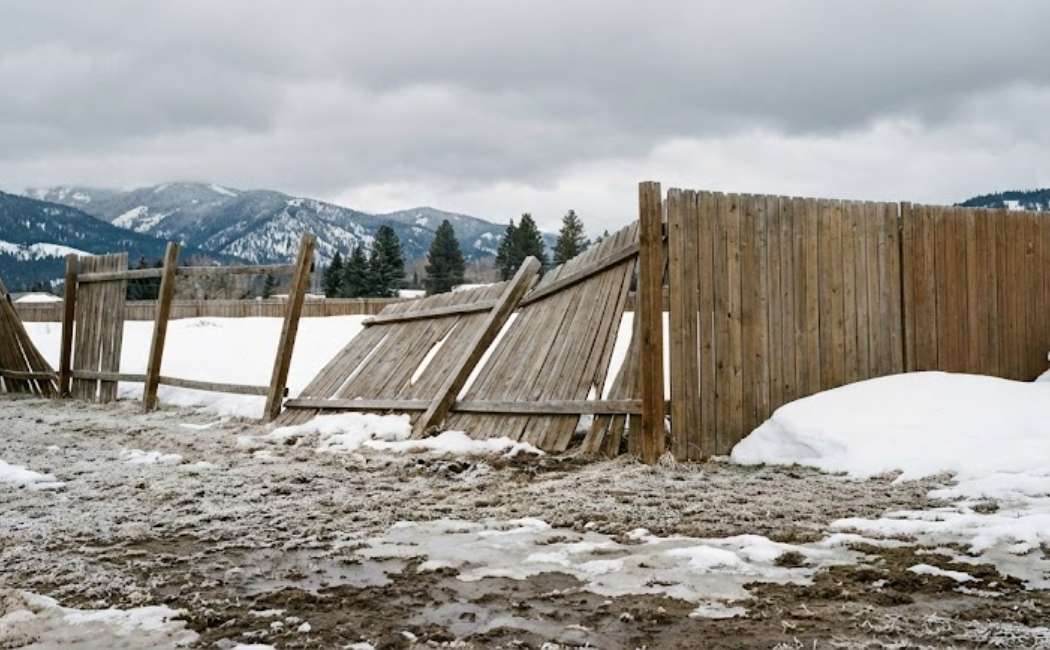
Laden Snow Frigid Weather
Heavy-laden snow and freezing weather conditions place an endless amount of stress on fence posts and panels. This extra weight can increase the chances of the following over time:
- Broken or snapped fence posts
Wood panels and rail warping
Fasteners and hardware are becoming loose
Solid panels and privacy fences are in greater danger due to their ability to prevent snow from blowing through. This is the root of snow trapping.
Effects of Freezing and Thawing on Materials
From the winter to the start of spring, Montana has constant freeze-thaw cycles. Moisture enters small cracks in wood or metal structures, freezes, and expands. That cycle repeats.
The consequences of that cycle include:
- Cracking and splitting of wood in fences
Failure of the paint or stain
Rusting and corrosion of metal parts
These small issues can easily turn into major structural problems if corrective actions are not taken.
Wind and Debris Destruction
Numerous sections of Montana are highly affected by strong winter winds. Combined gusts and frosted ground can loosen fence posts. Frozen tree limbs, along with wind-transported debris, can produce sudden impact harm.
These forces often result in:
- Broken fence panels
Sections of the fence are leaning
Total collapse of old fences
Moisture and Soil Saturation
The soil surrounding the fence posts becomes saturated due to winter rains and the melting of snow. When the ground becomes soft, frost-affected ground can become uneven. In turn, posts can shift or sink. This leads to:
- Uneven or leaning fence lines
Wood posts that are rotting
Loss of stability of the entire fence
Moisture-related problems are the most common issues with winter fences in Montana.
Signs It’s Time to Repair Your Fence
It’s great to know that not all winter damage is extreme enough to require a full replacement. Timely repairs will often suffice.
1. Minor Cracks or Splits in Panels
When it comes to wooden fences, a few small cracks or splits in panels will often be repairable. Degradation can be stopped from moisture intrusion by sealing or replacing individual boards.
2. Loose Posts or Hinges
Professionals can often mitigate the effects of fences with slightly loose posts or gates with sagging hinges. By replacing loose hardware on gates, the life expectancy of the fence can be increased by several years.
3. Cosmetic Damage That Doesn’t Affect Stability
Cosmetic changes often do not compromise the stability, like paint chips, worn stains, or even surface rust. Refinishing or protective surface coatings can help with these problems.
None of these problems requires the attention of a major construction crew. In fact, the Best Fence Contractor MT is a professional who can assess the minor damages safely and complete the repairs to save you from major expenses.
Repair vs. Replace: Cost & Longevity Considerations
There is a cost to consider when differentiating what is more economical between a repair and a replacement. Generally, repairs tend to cost less; however, if the fence is already weakened, repairs may not last through other winters.
In Montana, the heavy snow loads, deep frost lines, and extreme temperature swings all add to the rapid aging of the fence. This is why selecting strong materials is so important:
- Wood is classic and popular, but takes a lot of upkeep
Vinyl’s moisture resistance is a big plus. It also won’t crack.
Metal is strong, but it can rust, so it needs protective coatings.
With a complete replacement, property owners can reposition and change to upgraded materials to improve the overall design for performance in winters and improve the structure’s lifespan.
Advantages of the Best Fence Contractor in MT
Every client receives complete assistance from Best Fence Contractor MT through the work of professionals.
Management of professionalism includes:
- Complete analysis of repair vs. replacement
Assessing replacement materials that withstand the winter period in Montana
Design recommendations that alleviate snow and wind load issues
Providing emergency winter storm repair
Seasoned contractors know the local weathering problems and what it takes to build long-lasting fences.
Protection of Your Fence: Maintenance Ideas
Any fence in Montana will enjoy and benefit from regular maintenance, and ideally, it will prolong the life of the fence.
Seasonal inspection checklist:
- Pre-winter inspections for loose posts or cracks
Inspecting post-winter for hidden damage
Additional tips:
- Sealing or staining wood fences to help minimize moisture ingress
Metal components should have added corrosion protection
Fall trimming of the trees around a fence
Restricting the snow build-up on fence lines
Long-term performance and overall decreased repair expenses will be a result of protective measures.
Conclusion
Investing in fences in Montana means factoring in the potential for harsh winters. Timely maintenance and replacements of sections can save on fence and fence costs. Knowing how and when to make fence repairs and replacements will save you peace of mind.
We recommend getting in touch with the Best Fence Contractor MT for inspection, maintenance, and replacement of durable sections of fences, and getting your winter arrangements in place before winter. Contact the Best Fence Contractor MT today!
FAQs
1: How do Montana winters affect the durability of fences?
Montana Winters can damage fences with ice, heavy snow, and particularly strong winds. Rot and other structural damages will worsen with the freeze-thaw cycles.
2: Is it better to repair or replace a fence if it’s had damage over the winter?
If rot occurs, it may get worse over time, so especially if it’s leaning damage, widespread replacement will be the better money-wise, and the best structural option.
3: What fence materials are the best performing in Montana, especially in winter?
Moisture tends to let fences stand the winter better, so vinyl and metal are best. Wood, sometimes even pressure-treated wood, holds up well to standing.
4: How do I know if I need an inspection of my fence?
Best Fence Contractor MT should be contacted with concerns about leaning sections of your fence, loose or rotting fence posts, or if your fence has sustained damage multiple times after winter storm events.
5: How do I protect my fence from sustained winter damage?
Inspections should be done regularly to help prevent damage from happening in winter. Also, sealing or staining your fence, applying rust-resistant materials, and keeping snow and debris from accumulating against the fence line.